Barriers in Learning Activities
A planned learning activity for our interactive learning resource blueprint is to provide a list of human- and nature-caused contributions to climate change and have the learners categorize them. To diminish barriers to this activity, each item will have a picture and text explaining what it is. Since this step will take place near the beginning of the resource, definitions will be provided for students to access if they wish. Confusion will be reduced throughout the activity by clearly stating what each item is. It may be best to not quantify this activity, as its intent is to bring awareness to misconceptions about contribution to climate change. After learners complete the activity, they will be informed on which items they got right, but there will not be a percentage or fraction contributed to it (if the chosen application allows).
Reducing Potential Barriers
We decided to use WordPress for our learning resource, as it allows us to insert the applications we wish to use and will be simple for learners to navigate. The website that learners will be interacting with will be built with a hyper-attention to detail. We will be aiming to only include relevant information and material, although we are using a website development service that carries some constraints to limiting distracting and redundant features and information.
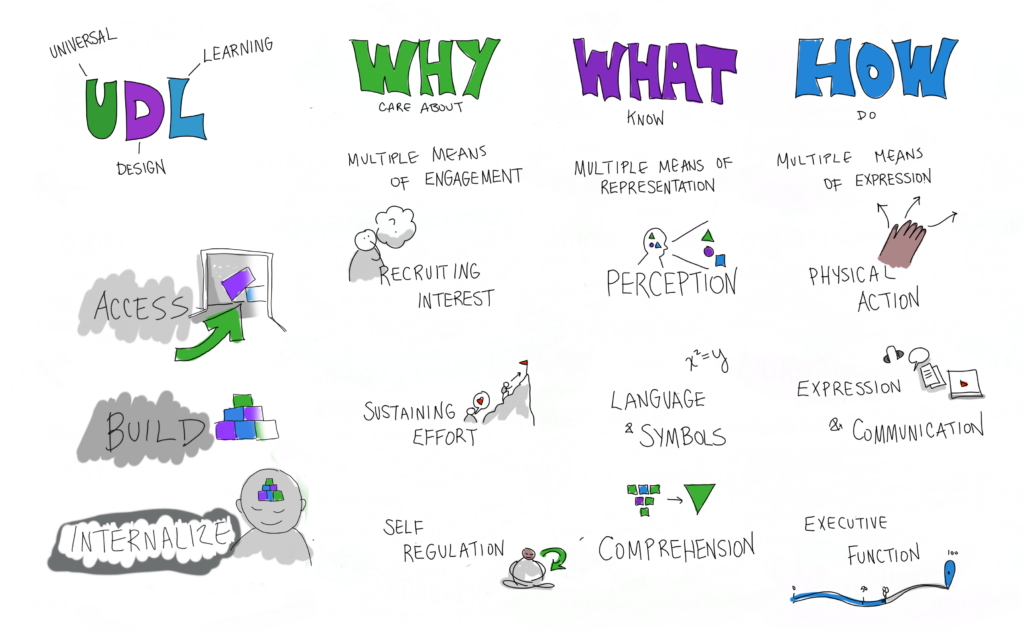
During the creation phase, we will be taking a Universal Learning Design (UDL) approach to attempt to eliminate barriers to ensure a seamless educational experience for any learner (Universal Design, 2023). Some examples of how we plan to implement UDL in our learning resource are making sure all the text is selectable (providing alternative texts and ensuring compatibility with screen readers) and providing a ‘dictionary’ page and layered definitions for words that will be used that may be above the target audience’s reading level and comprehension capacity.
Our educational resource will implement UDL by ensuring text is fully selectable, screen-reader compatible, and alt text is provided for images. We will be providing scaffolded vocabulary support with a ‘dictionary’ page dedicated to definitions and layered definitions integrated into the resource itself.
References
Universal Design. (2023). EDCI 335. https://edtechuvic.ca/edci335/universal-design/
Proudly powered by WordPress